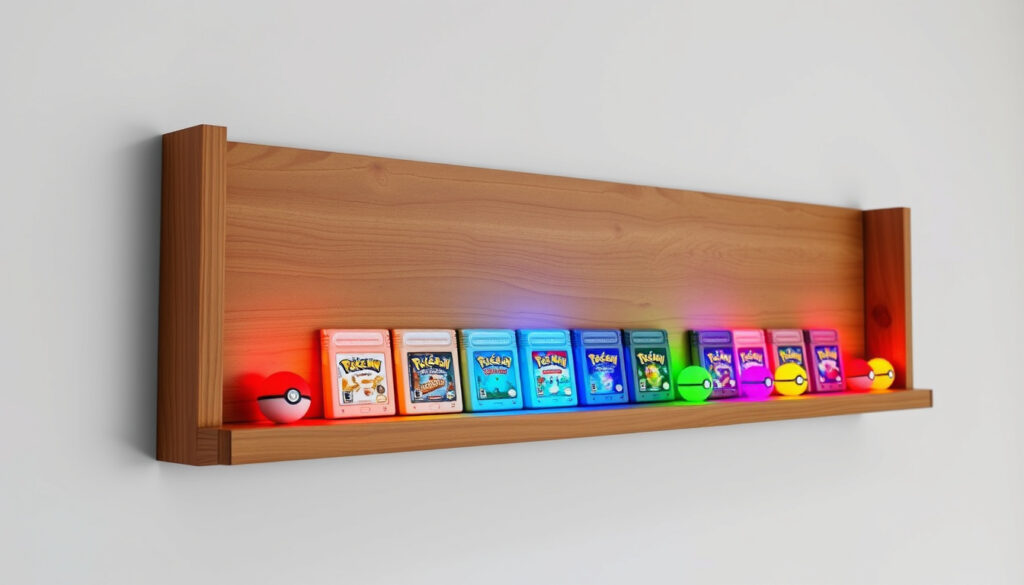
Pokémon Games in Order: Release, Play & Generation Guide
Twenty-eight years and nine generations deep, the Pokémon series spans everything from Game Boy cartridges to open-world Switch adventures. Whether you want the chronological timeline or just a clear starting point, here’s everything you need — with dates and recommendations grounded in how the community actually plays.
Mainline Generations: 9 · First Release Year: 1996 · Core Games Released: Over 30 · Platforms Spanned: Game Boy to Switch · Spin-offs Included: Dozens
Quick snapshot
- Release order spans Red/Green (1996) through Scarlet/Violet (2022) (Wikipedia)
- Nine generations across six Nintendo handheld and home platforms (Radio Times)
- The “best” play order depends heavily on your tolerance for retro graphics and whether you value story progression over modern convenience
- No single official recommendation from The Pokémon Company on play sequencing
- Pokémon Legends: Z-A is scheduled for 2025 on Nintendo Switch — the next major release
- No further Switch titles announced beyond that horizon as of early 2025
- If you’re new: start with modern remakes (FireRed or HeartGold paths), then branch outward
- If you want the full timeline: begin with 1996 and work chronologically, knowing early games show their age
The key facts table below consolidates the primary timeline markers across generations.
| Label | Value |
|---|---|
| First Game Release | 1996 (Red/Green) |
| Total Generations | 9 |
| Key Platforms | Game Boy, DS, 3DS, Switch |
| Mainline Focus | Core RPGs by generation |
| Core Paired Games | Always paired releases (Red/Blue, Gold/Silver, Ruby/Sapphire, etc.) |
| Enhanced Versions | Yellow, Crystal, Emerald, Platinum, etc. between paired releases |
What is the order of Pokémon games?
The Pokémon series follows a strict chronological release order from 1996 onward, with each generation building on the last. The games break down into paired core releases, enhanced mid-cycle versions, and remakes that modernize earlier generations. The Radio Times gaming publication notes each generation typically features paired core games plus enhanced versions or remakes.
Release order overview
Pokémon Red and Green launched first — in Japan only — on February 27, 1996 for Game Boy (Wikipedia). North America received Pokémon Red and Blue on September 28, 1998 for Game Boy (Pocket Tactics gaming outlet). From there, the series expanded:
- 1999–2001: Second generation — Gold and Silver on Game Boy Color, followed by Crystal
- 2002–2005: Third generation — Ruby and Sapphire on Game Boy Advance, plus FireRed, LeafGreen, and Emerald
- 2006–2009: Fourth generation — Diamond and Pearl on Nintendo DS, followed by Platinum and HeartGold/SoulSilver
- 2010–2012: Fifth generation — Black and White on Nintendo DS, followed by Black 2 and White 2
- 2013–2017: Sixth and seventh generations — X and Y on Nintendo 3DS, Sun and Moon, and Ultra variants
- 2018–present: Eighth and ninth generations — Switch titles including Sword and Shield, Brilliant Diamond/Shining Pearl, Legends: Arceus, and Scarlet/Violet
Mainline vs spin-offs
The core experience lives in the mainline paired releases and their enhanced or remade versions. Dozens of spin-off titles exist across Mystery Dungeon, Conquest, Ranger, and Poképark series, but the mainline path is what most players refer to when discussing “Pokémon games in order.”
How to play the Pokémon games in order?
Two practical paths exist: release-order play for purists who want the full historical arc, and recommended-play-order for players who prioritize modernized entry points and balanced progression. The Pocket Tactics gaming outlet documents community consensus leaning toward the second approach for most newcomers.
Step-by-step play sequence
For a recommended sequence that balances nostalgia with modern design sensibilities:
- Start with Pokémon FireRed or LeafGreen (2004 remakes of Gen 1) on Game Boy Advance or via Virtual Console — this modernizes the original 151 without the retro hardware barriers
- Move to Pokémon HeartGold or SoulSilver (2010 remakes of Gen 2) on Nintendo DS — widely considered the peak of the classic formula
- Play Pokémon Emerald (2004 enhanced third generation) or advance directly to Pokémon Platinum (2009 fourth generation enhanced)
- Branch into later generations based on platform access: X and Y for 3DS, Sword or Shield for Switch, or Scarlet/Violet for the most recent experience
Platform considerations
Game Boy and Game Boy Color titles are available via Nintendo 3DS Virtual Console. Game Boy Advance titles (FireRed, LeafGreen, Emerald, Ruby, Sapphire) are also on 3DS Virtual Console, though that store closed in March 2024 — existing buyers retain access. Nintendo DS titles (Diamond, Pearl, Platinum, HeartGold, SoulSilver, Black, White, Black 2, White 2) require original hardware or used carts. Nintendo 3DS titles (X, Y, Sun, Moon, Ultra Sun, Ultra Moon, Omega Ruby, Alpha Sapphire) remain on the 3DS eShop. Nintendo Switch hosts the eighth and ninth generations plus remakes of Gen 1 (Let’s Go) and Gen 4 (Brilliant Diamond/Shining Pearl).
Switch owners catch up fastest via Scarlet/Violet plus Sword/Shield DLC. Retro enthusiasts with 3DS access still have the key classics through Virtual Console — for now.
What are the generation 1, 2, 3, 4, 5 in Pokémon?
Each generation marks a new wave of Pokémon, mechanics, and regional settings introduced approximately every three years. The generational system is the primary organizational structure for the franchise.
Gen 1 details
The first generation introduced 151 Pokémon from Kanto region on Game Boy. Red and Green released February 27, 1996 in Japan; Red and Blue arrived September 28, 1998 in North America (Pocket Tactics). Yellow followed October 19, 1999 as a special edition aligning with the anime.
- Platform: Game Boy
- New Pokémon: 151
- Key games: Red, Blue, Yellow
Gen 2 details
The second generation added 100 new Pokémon from Johto region on Game Boy Color. Gold and Silver released October 15, 2000 in the US (Radio Times). Crystal arrived July 29, 2001 as an enhanced version.
- Platform: Game Boy Color
- New Pokémon: 100
- Key games: Gold, Silver, Crystal
Gen 3 details
The third generation launched Ruby and Sapphire on Game Boy Advance November 21, 2002 in Japan, March 19, 2003 in the US (Bulbapedia). This generation omitted national dex connectivity but added 135 new species from Hoenn.
- Platform: Game Boy Advance
- New Pokémon: 135
- Key games: Ruby, Sapphire, Emerald, FireRed, LeafGreen
Gen 4 details
The fourth generation brought Diamond and Pearl on Nintendo DS April 22, 2007 in North America (Wikipedia). Platinum released March 22, 2009 as the enhanced version, with HeartGold and SoulSilver remaking Gen 2.
- Platform: Nintendo DS
- New Pokémon: 107
- Key games: Diamond, Pearl, Platinum, HeartGold, SoulSilver
Gen 5 details
The fifth generation started September 18, 2010 with Pokémon Black and White in Japan on Nintendo DS (Wikipedia). Notably, this generation broke the pattern by releasing sequels (Black 2 and White 2, October 7, 2012) instead of enhanced versions — a first and last for the mainline series.
- Platform: Nintendo DS
- New Pokémon: 156 (all new roster, no legacy Pokémon at launch)
- Key games: Black, White, Black 2, White 2
Gen 5’s “clean slate” approach means its 156 Pokémon were the only ones available at launch — no older species until post-game. This makes it uniquely self-contained for a fresh start.
What’s a good order to play Pokémon games?
Community consensus points to a remake-first approach for most players, with branching options once you’ve experienced the core loop. Expert sources like Pocket Tactics recommend starting with the most polished versions of early generations.
Recommended sequence from experts
The prevailing community recommendation runs FireRed/LeafGreen → HeartGold/SoulSilver → Emerald or Platinum → then into Gen 5+. This path hits the high points of each era while skipping games that haven’t aged as well (original Gen 1 via cartridge, Gen 3 original Ruby/Sapphire without QoL features).
“Nintendo was really trying something new with the 3DS, so the Pokémon Company did the same with X and Y.”
— Pocket Tactics, gaming site
Remake paths
Remakes exist for Gens 1, 2, 3, and 4, giving you multiple “best versions” for each era:
- Gen 1: FireRed/LeafGreen (2004) or Let’s Go Pikachu/Eevee (2018)
- Gen 2: HeartGold/SoulSilver (2010) — considered among the best in the series
- Gen 3: Omega Ruby/Alpha Sapphire (2014)
- Gen 4: Brilliant Diamond/Shining Pearl (2021)
Remakes often strip features from later games — Brilliant Diamond lacks the Grand Underground and Super Contests from Platinum, for example. Purists sometimes prefer the enhanced versions (Platinum over Diamond/Pearl).
Pokémon games in order of generation
Here’s how each generation breaks down by platform and key titles, with verified release dates where available.
Gen lists by platform
- Game Boy (Gen 1): Red, Blue, Yellow
- Game Boy Color (Gen 2): Gold, Silver, Crystal
- Game Boy Advance (Gen 3): Ruby, Sapphire, Emerald, FireRed, LeafGreen
- Nintendo DS (Gen 4–5): Diamond, Pearl, Platinum, HeartGold, SoulSilver, Black, White, Black 2, White 2
- Nintendo 3DS (Gen 6–7): X, Y, Omega Ruby, Alpha Sapphire, Sun, Moon, Ultra Sun, Ultra Moon
- Nintendo Switch (Gen 8–9): Let’s Go Pikachu, Let’s Go Eevee, Sword, Shield, Isle of Armor DLC, Crown Tundra DLC, Brilliant Diamond, Shining Pearl, Legends: Arceus, Scarlet, Violet, Teal Mask DLC, Indigo Disk DLC
Switch, DS, 3DS, GBA
The Radio Times gaming publication traces the platform progression: Game Boy for Gen 1, Game Boy Color for Gen 2, Game Boy Advance for Gen 3, Nintendo DS for Gen 4–5, 3DS for Gen 6–7, and Switch for Gen 8–9. The visual and mechanical leap from Gen 1’s black-and-white graphics to Gen 9’s open-world Switch gameplay spans nearly three decades of hardware evolution.
Pokémon games timeline
The table below maps each generation to its release period and key titles released during that window.
| Period | Games Released |
|---|---|
| 1996–1998 | First generation: Red, Green (Japan), Blue, Yellow |
| 1999–2001 | Second generation: Gold, Silver, Crystal |
| 2002–2005 | Third generation: Ruby, Sapphire, FireRed, LeafGreen, Emerald |
| 2006–2009 | Fourth generation: Diamond, Pearl, Platinum, HeartGold, SoulSilver |
| 2010–2012 | Fifth generation: Black, White, Black 2, White 2 |
| 2013–2015 | Sixth generation: X, Y, Omega Ruby, Alpha Sapphire |
| 2016–2017 | Seventh generation: Sun, Moon, Ultra Sun, Ultra Moon |
| 2018–2022 | Eighth generation: Let’s Go, Sword/Shield, DLC, Brilliant Diamond/Shining Pearl, Legends: Arceus |
| 2022–2024 | Ninth generation: Scarlet, Violet, DLC expansions |
| 2025 (scheduled) | Legends: Z-A |
The pattern shows roughly three-year cycles between generations, with mid-cycle enhanced versions and remakes filling gaps between paired core releases.
Quotes and expert perspectives
“Gen 5 broke tradition by using sequels (Black 2/White 2) instead of enhanced versions — a first and last for the mainline series.”
— Radio Times, gaming publication
The Gen 5 sequel approach gave players a direct narrative continuation — unusual in a series that typically resets each generation’s story.
Summary
The Pokémon series spans nine generations from 1996’s Game Boy origins to 2022’s open-world Scarlet/Violet on Switch, with over 30 core games plus remakes, enhanced versions, and dozens of spin-offs. For most players today, the recommended path runs FireRed/LeafGreen → HeartGold/SoulSilver → Platinum/Emerald → then into whichever generation your platform supports. If you want the chronological experience instead, start with Red/Blue (or FireRed as a modern proxy) and work forward — early games show their age, but the core loop remains compelling.
Switch owners jumping in fresh get Scarlet/Violet plus Sword/Shield for the modern era. Retro enthusiasts with 3DS access still have the classics through Virtual Console — for now.
Frequently asked questions
How do you play Pokémon games in release order?
Start with Pokémon Red and Blue (1998 North America release), then progress through Gold/Silver (2000), Ruby/Sapphire (2002), Diamond/Pearl (2007), Black/White (2010), X/Y (2013), Sun/Moon (2016), and Sword/Shield (2019) — with the many enhanced versions and remakes inserted as you go. This gives you the full historical arc, though early games require hardware considerations (3DS Virtual Console for most retro titles).
What is the chronological order of mainline Pokémon games?
Chronological release order runs Red/Green (1996) through Scarlet/Violet (2022), with nine generations across Game Boy, Game Boy Color, Game Boy Advance, Nintendo DS, Nintendo 3DS, and Nintendo Switch. Each generation added new Pokémon, regions, and mechanics.
Which Pokémon games are on Nintendo Switch in order?
Switch games in release order: Let’s Go Pikachu/Eevee (2018), Sword/Shield (2019), Isle of Armor DLC (2020), Crown Tundra DLC (2020), Brilliant Diamond/Shining Pearl (2021), Legends: Arceus (2022), Scarlet/Violet (2022), Teal Mask DLC (2023), Indigo Disk DLC (2024), and Legends: Z-A (scheduled 2025).
What order should beginners play Pokémon games?
The community-recommended order for beginners is FireRed/LeafGreen → HeartGold/SoulSilver → Emerald or Platinum → then whichever modern generation your platform supports. This path hits the high points while using the most polished versions of each era.
Are there Pokémon games for PC?
No mainline Pokémon games have official PC releases. Pokémon GO is available on PC via Android emulators, but the core RPG series remains Nintendo-platform exclusive. Fan projects exist but are unofficial.
What are the Pokémon games for DS in order?
Nintendo DS Pokémon games in order: Diamond/Pearl (2007), Platinum (2009), HeartGold/SoulSilver (2010), Black/White (2010), Black 2/White 2 (2012). All five require original DS hardware or used carts, as the DS eShop closure ended digital access.
How many generations of Pokémon games exist?
Nine generations exist as of 2024, spanning Gen 1 (1996) through Gen 9 (2022). Gen 10 is expected to follow Legends: Z-A (2025), continuing the series on Nintendo Switch.
Related reading: Alone in the Dark PS5 Remake · Devil May Cry Anime 2025 vs 2007
This guide mirrors the release timeline and play guide across nine generations, from Red and Green in 1996 to upcoming Switch 2 exclusives.
More related posts
 Blinded by the Light Lyrics – Springsteen Original and Manfred Mann Hit
 Area of a Square: Formula, Examples, and How to Calculate
 West Indies Cricket Team vs Pakistan National Cricket Team Match Scorecard – Partial Records Feature Babar Azam 158*
 St. Louis Cardinals vs Phillies Match Player Stats
 Winter Solstice 2025: Date, Time & Celtic Traditions
 Washington Wizards vs 76ers Match Player Stats: Full Breakdown
 Game of Thrones Spin Off: Confirmed, Canceled & Upcoming Series