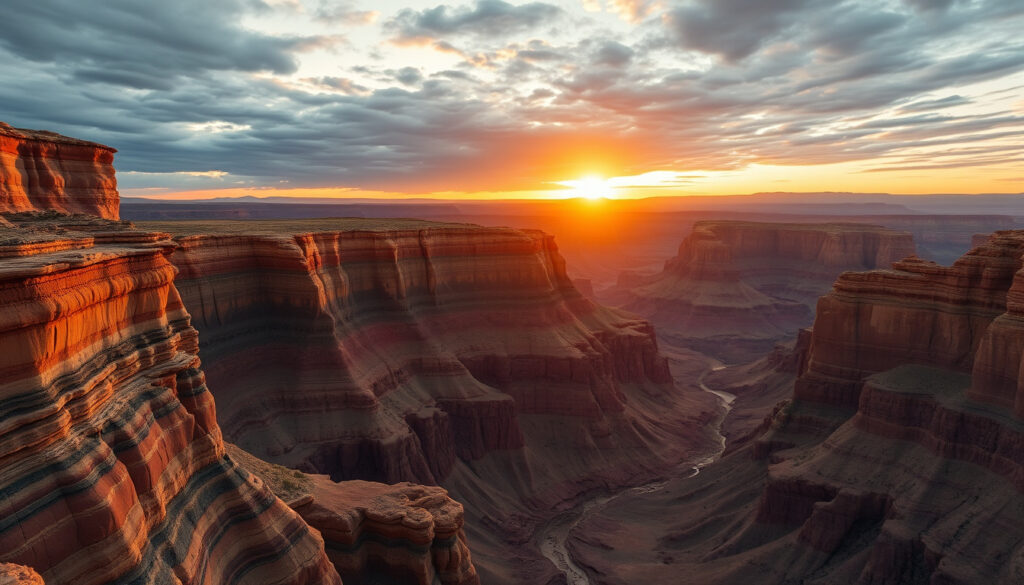
How Old is the Earth? 4.54 Billion Years Explained
Earth is 4.54 billion years old by scientific consensus, yet modern humans have walked its surface for only about 300,000 years—a blink in geological terms.
Scientific Age: 4.54 billion years ·
Universe Age: 13.8 billion years ·
Sun Age: 4.6 billion years ·
Human Life Start: 300,000 years ago ·
Name Origin: ~1,000 years old
Quick snapshot
- Earth’s measured age: 4.54 billion years (NASA science division)
- Humans: ~300,000 years on Earth (National Geographic human origins)
- Bible-based estimates: ~6,000 years (Logos Bible Software biblical analysis)
- Religious tradition dating varies by text tradition and interpretation (Logos Bible Software theological analysis)
- Precise sequence of early accretion events still refined by ongoing modeling (NASA planetary science)
- Planck spacecraft (2013): universe 13.82 billion years (Armstrong Institute cosmological data)
- Archbishop Ussher’s date: October 22, 4004 BC (Logos Bible Software historical chronology)
- Radiometric refinement continues to narrow the age window (Wikipedia geological consensus)
- Debate between scientific and scriptural frameworks remains active in public discourse (BioLogos scholarly discourse)
Key data points provide a numerical anchor for understanding Earth’s age and humanity’s place within it.
| Label | Value |
|---|---|
| Estimated Age | 4.54 billion years |
| Measurement Method | Radiometric dating |
| Solar System Age | 4.6 billion years |
| Universe Age | 13.8 billion years |
| Human Appearance | 300,000 years ago |
| Earliest Life | 3.5 billion years ago |
| Biblical Age Estimate | ~6,000 years |
How old is Earth in years?
Scientists have settled on a precise answer: Earth is approximately 4.54 billion years old, give or take a few tens of millions of years. The most widely accepted estimate comes from radiometric dating of ancient zircon crystals found in Western Australia, combined with measurements from meteorites that orbit the same formation epoch as our planet. (NASA science division)
Scientific methods
Radiometric dating works by measuring the decay of radioactive isotopes trapped inside mineral crystals as they form. When a zircon crystal solidifies, it locks in trace amounts of uranium and thorium but excludes lead. Over billions of years, the uranium decays into lead at a known rate, and the ratio between parent isotope and decay product reveals the crystal’s age. The same clock has been read in moon rocks brought back by Apollo missions and in meteorites recovered on Earth—all pointing to the same age window.
Key evidence from rocks and meteorites
Meteorites are the cleanest evidence because they never went through Earth’s geological recycling. The Canyon Diablo meteorites, fragments from an asteroid that struck Earth 50,000 years ago, have been dated repeatedly by multiple labs using different isotope systems. The answers converge within 1%. This convergence across independent methods is exactly why scientists treat the 4.54 billion-year figure as robust. (Wikipedia geological overview)
Four independent measurement lines and the answer holds. That kind of convergence is rare in science and explains why the 4.54 billion-year estimate has remained stable for decades.
How old is the Earth with humans?
Geologically speaking, humans are a remarkably recent addition to Earth’s story. Our planet formed roughly 4.54 billion years ago, yet the first members of our own species emerged only around 300,000 years ago. That means Homo sapiens represents less than 0.007% of Earth’s total history—a hairline sliver at the very top of an enormously deep stack of time. (Britannica human origins)
Timeline of life
Complex multicellular life didn’t appear until roughly 540 million years ago during the Cambrian Explosion, when most major animal body plans show up in the fossil record nearly simultaneously. Life itself originated far earlier—microscopic bacterial colonies date back at least 3.5 billion years, and chemical traces suggestive of early metabolism have been pushed back even further. (Wikipedia fossil record)
Rise of Homo sapiens
The fossil record places anatomically modern humans in Africa by at least 300,000 years ago, with physical characteristics matching our species appearing in the Jebel Irhoud region of Morocco. (National Geographic archaeological evidence) Written civilization, by contrast, spans only about 5,000 years—less than two ten-thousandths of a percent of Earth’s total age.
If Earth’s 4.54 billion-year history were compressed into a single calendar year, humans appear at 11:36 PM on December 31. Every civilization, every empire, every written word falls within that final minute.
When did human life first appear on Earth?
The story of human life on Earth is one of gradual emergence rather than a sudden debut. Our lineage diverged from other primates several million years ago, but the species we recognize as fully modern Homo sapiens crystallized in Africa and dispersed across the globe over the past 100,000 years. (Britannica evolutionary timeline)
Early hominids
Before Homo sapiens, a succession of hominid species walked upright across Africa and parts of Eurasia. Australopithecus species appeared roughly 4 million years ago, followed by Homo erectus around 2 million years ago, who spread as far as East Asia and likely controlled fire. Neanderthals branched off in Europe and the Middle East roughly 400,000 years ago, overlapping with early modern humans until their disappearance around 40,000 years ago.
Modern humans
Genetic studies confirm that all non-African humans carry traces of Neanderthal DNA, evidence of interbreeding as our ancestors moved into Europe. The great diaspora of our species—driven by climate shifts, population pressure, and curiosity—reached every habitable continent within roughly 50,000 years. (National Geographic genetic research)
What this pattern shows is that “human life” is not a single binary event but a braided river of lineage, capacity, and culture stretching back millions of years. Our species arrived late, but it inherited a planet already rich with life.
Bottom line: Human existence represents an astonishingly recent chapter in Earth’s biography, yet our species rapidly reshaped the planet through technology, language, and culture.
How old is Earth according to the Bible?
A different framework for estimating Earth’s age comes from reading the biblical text literally, using the genealogies recorded in Genesis chapters 5 through 11 to trace the timeline from Adam to Abraham. Young Earth Creationists hold that these genealogies give a continuous year-by-year account, placing creation around 6,000 years ago. (Logos Bible Software scriptural analysis)
Young Earth views
The most famous biblical chronology calculation was performed by Archbishop James Ussher (1581–1656), an Irish scholar who traced every generation listed in Genesis and arrived at a precise date: October 22, 4004 BC. (Logos Bible Software Ussher chronology) Dr. Floyd Jones, a modern creation scientist, independently reached the same conclusion using a more recent Greek text tradition. (Logos Bible Software modern calculation) Young Earth Creationists argue that the Hebrew word yom in Genesis 1 refers specifically to a 24-hour period, supporting a literal six-day creation. (Notre Dame biblical scholarship)
Interpretations
A common criticism is that Genesis skips generations in its genealogies, making a direct sum unreliable. Proponents counter that the text measures years between two named events, not the number of generations listed. (Logos Bible Software textual defense) Old Earth Creationists, meanwhile, read Genesis 1:1 (“In the beginning God created the heavens and the earth”) as potentially encompassing billions of years before the “days of creation” described from verse 3 onward. (Armstrong Institute Genesis interpretation) Some scholars argue the Bible does not explicitly state an age for the Earth or universe, and that neither Jesus nor the apostles addressed the question in their teaching. (BioLogos theological perspective)
Modern creation scientists themselves split on the exact number: those following the more recent Hebrew textual tradition arrive at roughly 6,000 years, while others who work from older Greek translations push toward 7,500 years. (Is Genesis History? textual variants)
How old is the universe?
Earth did not form in isolation—it is a product of the same cosmic process that created the entire observable universe. The universe is currently measured at approximately 13.8 billion years old, a figure derived from the rate of cosmic expansion observed in the cosmic microwave background radiation. (NASA cosmological data)
Big Bang evidence
The Big Bang model rests on three pillars: the observed expansion of the universe, the abundance of light elements formed in the first minutes of creation, and the cosmic microwave background—the afterglow heat signature from 380,000 years after the initial event. The European Space Agency’s Planck spacecraft refined the universe’s age to 13.82 billion years in 2013. (Armstrong Institute Planck measurements)
Earth in cosmic context
The Solar System formed roughly 4.6 billion years ago, inside a galaxy already 9 billion years old. Earth is the product of an old universe, built from stellar debris forged in earlier generations of stars. Old Earth Creationists, who accept the scientific timeline, note that God created the universe around 14 billion years ago in an event they identify with the Big Bang. (Logos Bible Software OEC perspective)
The cosmic expansion rate (the Hubble constant) is currently being refined using new telescope data, and different measurement approaches are yielding slightly different values. That tension doesn’t threaten the 13.8 billion-year order of magnitude—it just means the precise number will continue to be updated.
Timeline
Five milestones help place Earth’s history and the human chapter within it in context.
| Date or Period | Event |
|---|---|
| 13.8 billion years ago | Big Bang — universe begins expanding from a hot, dense state |
| 4.6 billion years ago | Solar System condenses from a rotating nebula of gas and dust |
| 4.54 billion years ago | Earth accretion completes; planet becomes geologically active |
| 3.5 billion years ago | Earliest confirmed microbial life appears in the fossil record |
| 300,000 years ago | Anatomically modern Homo sapiens emerges in Africa |
The implication: nearly 99.993% of Earth’s history unfolded before any member of our species existed. The geological and biological record preserved in rocks and fossils gives us a detailed picture of that vast pre-human world.
Clarity on what we know and what we don’t
There is a meaningful difference between questions that science has resolved and those that remain genuinely open.
Confirmed facts
- Scientific consensus on Earth’s age: 4.54 billion years ±50 million, measured via radiometric dating of zircon crystals and meteorites
- Human appearance on Earth: fossil and genetic evidence places Homo sapiens in Africa roughly 300,000 years ago
- Archbishop James Ussher’s biblical chronology calculation: October 22, 4004 BC, derived from Genesis genealogies
Unresolved or interpretive
- Whether Genesis genealogies contain gaps remains debated among theologians and biblical scholars
- Theological interpretations aligning Genesis 1:1-2 with geological eras are speculative and lack consensus within faith traditions
- How different Christian denominations officially position themselves on Earth’s age varies widely
The implication: both scientific and religious frameworks contain established facts and open questions, but they operate from different starting assumptions about what constitutes reliable evidence.
What experts say
The name Earth is about 1,000 years old. It comes from both English and German languages, and it is derived from the Anglo-Saxon word erda and the German word erde, both of which mean ground.
— NASA science division
Scientific evidence for an old Earth is clearer and more direct, with independent methods for measuring age often closely matching each other. Scientific tensions with an old Earth interpretation are fewer, more indirect, and more likely to be overcome with new discoveries than tensions with a young Earth.
— Logos Bible Software scientific comparison
For the informed reader, the two perspectives are not simply disagreeing about facts—they are operating from different interpretive frameworks about what counts as reliable evidence. That distinction matters enormously when evaluating the strength of each position.
Bottom line
Earth is 4.54 billion years old by the best available scientific evidence, measured and remeasured across independent lines of inquiry. Within that span, human life is an astonishingly recent development—a thin green fringe spanning just 300,000 years atop a planet that had already supported billions of years of microbial life. Religious traditions offer a radically different timescale, with biblical chronologies typically placing creation around 6,000 years ago. These two frameworks rest on incompatible epistemologies: one treats the natural world as the primary record, the other treats scriptural text as the primary record. Neither position is naive or dishonest; they represent genuinely different ways of asking where knowledge comes from. For readers navigating the tension, the productive question is not “which is right,” but “which framework is most useful for which kind of inquiry”—and that answer depends on what you are ultimately trying to understand.
That stark ratio is at the heart of a conversation that has divided scholars, scientists, and believers for centuries. This article brings together what hard evidence says about Earth’s age, where humans fit into the story, and how religious traditions have answered the same question through their own frameworks.
Related reading: Easter date calculation · Archbishop Ussher-like chronology
Scientific consensus dates Earth to 4.54 billion years, a figure echoed in detailed cosmic timeline analysis which contrasts religious views like the Bible’s 6,000-year timeline.
Frequently asked questions
How was the age of Earth determined?
Scientists use radiometric dating, measuring the decay of radioactive isotopes in ancient zircon crystals from Western Australia and in meteorites that formed alongside Earth. The technique has been independently verified across multiple isotope systems and sample types, all converging on the same 4.54-billion-year figure.
What is Earth’s age compared to the Sun?
The Sun is approximately 4.6 billion years old, slightly older than Earth. Both formed from the same primordial nebula that collapsed to create our Solar System.
How old is Earth according to science?
The scientific consensus estimate is 4.54 billion years, with an uncertainty of roughly ±50 million years. This figure comes from multiple independent dating methods and has remained stable for decades.
When did life begin on Earth?
The earliest confirmed life dates to approximately 3.5 billion years ago, based on fossil microbial structures. Chemical traces suggest life may have emerged even earlier.
What do religious texts say about Earth’s age?
Young Earth Creationists, using biblical genealogies in Genesis, typically calculate Earth’s age at around 6,000 years. Old Earth Creationists read Genesis more figuratively and accept scientific timelines of billions of years.
How long have humans been on Earth?
Anatomically modern Homo sapiens emerged approximately 300,000 years ago. Written civilization spans only about 5,000 years, a tiny fraction of human history.
Is Earth’s age exact?
No number in science is infinitely precise. The 4.54-billion-year figure carries an uncertainty window of roughly ±50 million years, and ongoing refinements in measurement techniques continue to narrow that range.
More related posts
 The Accountant 2 Release Date: Theatrical & Prime Video
 The Last Thing He Told Me: Worth Watching? Season 2 Update
 Who Is Vanessa Trump? Age, Children, Net Worth, Tiger Woods
 Blue Buffalo Cat Food – Reviews, Types and Ingredients Guide
 Truck Stops Near Me: Showers, Fuel, Amenities in US & Ireland
 Roasted Brussel Sprouts Recipe: Crispy & Flavorful
 Love Is Blind New Episodes: Season 10 Release Schedule