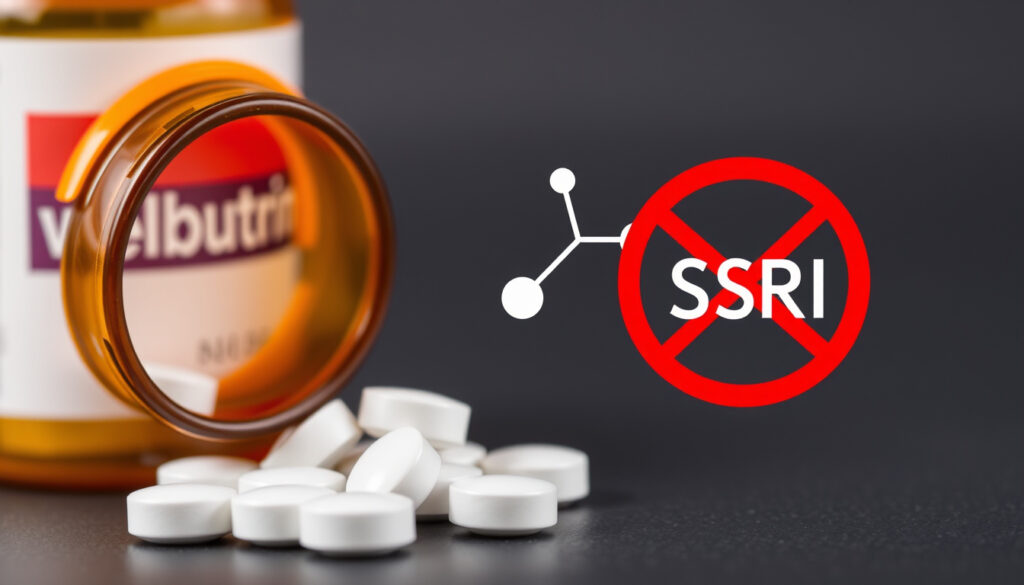
Is Wellbutrin an SSRI? No, It’s an NDRI – Here’s What That Means
Anyone who’s searched for information about antidepressants has probably stumbled across a confusing question: Is Wellbutrin an SSRI? It’s a fair mix-up, given that both are used for depression, but the answer matters for side effects, treatment choices, and safety.
Generic name: Bupropion ·
Drug class: Norepinephrine-dopamine reuptake inhibitor (NDRI) ·
Primary use: Major depressive disorder ·
Also approved for: Smoking cessation (Zyban) ·
Not an: SSRI, SNRI, or MAOI
Quick snapshot
- Wellbutrin is an NDRI, not an SSRI (FDA Wellbutrin label)
- Seizure risk increases at doses above 450 mg/day (FDA Wellbutrin SR label)
- Low risk of sexual side effects compared to SSRIs (Wikipedia)
- Long-term effectiveness for anxiety disorders when used off-label
- Prevalence of delayed emotional side effects like crying spells
- Whether Wellbutrin is more effective for certain depression subtypes
- Wellbutrin SR initial FDA approval: 1985 (FDA Wellbutrin label)
- Wellbutrin XL label last revised: March 2022 (FDA Wellbutrin XL label)
- Research continues on bupropion for anxiety disorders and bipolar depression (Wikipedia)
- Ongoing studies on combination therapy with SSRIs (Medical News Today)
Five key facts, one pattern: Wellbutrin’s unique mechanism sets it apart from the SSRIs you’ve probably heard of.
| Label | Value |
|---|---|
| Generic Name | Bupropion |
| Drug Class | Norepinephrine-dopamine reuptake inhibitor (NDRI) |
| FDA Approved For | Major depressive disorder, SAD, smoking cessation |
| Common Brand Names | Wellbutrin, Zyban, Aplenzin |
| Mechanism | Inhibits reuptake of norepinephrine and dopamine |
The implication: Wellbutrin’s classification as an NDRI, not an SSRI, explains why it behaves differently in the body — and why patients often experience a completely different side effect profile.
How is Wellbutrin different from SSRIs?
Mechanism of action: NDRI vs SSRI
- Wellbutrin blocks the reuptake of norepinephrine and dopamine — it does not affect serotonin (FDA Wellbutrin label).
- SSRIs block the reuptake of serotonin, raising its levels in the brain (Wikipedia).
- This difference in neurotransmitter targets leads to a distinct side effect profile and clinical response.
Chemical structure and neurotransmitter targets
- Wellbutrin is an aminoketone antidepressant, structurally unrelated to SSRIs (FDA Wellbutrin XL label).
- SSRIs are typically based on a phenylpropylamine structure.
- Where SSRIs increase serotonin, Wellbutrin increases norepinephrine and dopamine levels.
Efficacy and side effect profiles
- Wellbutrin is as effective as SSRIs for treating major depressive disorder, but with a different side effect profile (GoodRx).
- Common SSRIs (like Lexapro, Zoloft) often cause sexual dysfunction, weight gain, and fatigue — Wellbutrin has a much lower risk of these.
- Wellbutrin, however, carries a higher risk of seizures at high doses and can cause anxiety, insomnia, and dry mouth.
One comparison, three critical differences: the table below shows how Wellbutrin stacks up against common SSRIs.
| Feature | Wellbutrin (NDRI) | SSRIs (e.g., Lexapro, Zoloft) |
|---|---|---|
| Mechanism | Blocks norepinephrine & dopamine reuptake | Blocks serotonin reuptake |
| Sexual side effects | Low risk (~1-2%) | Common (30-60%) |
| Weight change | Weight loss or neutral | Weight gain common |
| Seizure risk | Dose-dependent (0.4% at standard doses) | Very low |
| Anxiety effect | May increase anxiety initially | Usually reduces anxiety |
| FDA approval for anxiety | No | Yes (for most) |
The pattern: Wellbutrin and SSRIs are both effective antidepressants, but the trade-offs are opposite. Patients who can’t tolerate sexual side effects may prefer Wellbutrin, while those with anxiety disorders are better matched with an SSRI.
Is Wellbutrin a mood stabilizer or antidepressant?
FDA classification as an antidepressant
The FDA label for Wellbutrin clearly states it is indicated for major depressive disorder — it is an antidepressant, not a mood stabilizer (FDA Wellbutrin label). Mood stabilizers are separate drug classes (lithium, anticonvulsants) used primarily for bipolar disorder.
Why it is sometimes mistaken as a mood stabilizer
Some patients report that Wellbutrin improves mood stability, especially when combined with an SSRI. But this is an off-label observation, not an approved indication. The FDA has not approved Wellbutrin for bipolar disorder (FDA Wellbutrin label).
Use in bipolar disorder (caution)
Wellbutrin can trigger manic episodes in people with bipolar disorder. The FDA label warns against use in patients with bipolar depression because of the risk of precipitating mixed or manic episodes (FDA Wellbutrin label).
Patients with bipolar disorder who take Wellbutrin without a mood stabilizer may experience a hard switch into mania — a serious consequence that the FDA label flags explicitly.
Is Wellbutrin more for anxiety or depression?
Primary indication: major depressive disorder
Wellbutrin is FDA-approved for depression, not for anxiety disorders (FDA Wellbutrin label). It is not approved for generalized anxiety disorder, social anxiety, or panic disorder.
Effectiveness for anxiety disorders
Some clinicians prescribe Wellbutrin off-label for anxiety, but the evidence is mixed. A review from Medical News Today notes that Wellbutrin can actually worsen anxiety in some patients, especially during the first few weeks.
Clinical considerations for anxious patients
For patients with both depression and anxiety, SSRIs are typically first-line because they effectively treat both. Wellbutrin may be added later to address residual depressive symptoms or sexual side effects from the SSRI (Wikipedia).
For patients whose depression is accompanied by anxiety, the choice often comes down to: tolerate possible sexual side effects from an SSRI, or risk increased anxiety with Wellbutrin.
What is the biggest side effect of Wellbutrin?
Seizure risk at high doses
The most serious side effect is dose-dependent seizure risk. The FDA label reports that seizure incidence increases almost tenfold between 450 mg/day and 600 mg/day (FDA Wellbutrin SR label). At standard doses (300-450 mg/day), the risk is about 0.4%.
Common side effects: dry mouth, insomnia, headache
Dry mouth, insomnia, headache, and nausea are the most frequently reported side effects. Unlike SSRIs, weight gain and sexual dysfunction are uncommon (GoodRx).
Weight loss and sexual side effects (low risk)
Wellbutrin is associated with modest weight loss, which can be a benefit for some patients. Sexual side effects — like decreased libido or erectile dysfunction — occur in less than 2% of users, compared to 30-60% with SSRIs.
Upsides
- Low risk of sexual dysfunction
- Weight neutral or weight loss
- No sedation (often energizing)
Downsides
- Seizure risk at high doses
- Can increase anxiety
- Contraindicated in eating disorders
What are some signs that Wellbutrin is working?
Timeframe for therapeutic effects
Patients often notice improvements in energy and motivation within 2-4 weeks. Full antidepressant effect may take 6-8 weeks (GoodRx). Unlike SSRIs, which can cause initial fatigue, Wellbutrin is often activating.
Improvement in motivation and energy
Many patients report feeling more awake, more focused, and less lethargic. This is consistent with Wellbutrin’s effect on norepinephrine and dopamine — neurotransmitters tied to arousal and reward.
Reduction in depressive symptoms
Key signs include: improved mood, less crying, more interest in hobbies, and better concentration. Some patients also report a decrease in emotional numbness (anhedonia) that can be a side effect of SSRIs (Medical News Today).
If you notice increased energy but no mood lift, or if anxiety spikes, the dose may need adjustment. A clinician can help separate true therapeutic response from activating side effects.
Confirmed facts vs. what’s unclear
Confirmed facts
- Wellbutrin is not an SSRI or SNRI; it is an NDRI (FDA Wellbutrin label).
- Seizure risk is dose-dependent (FDA Wellbutrin SR label).
- Weight gain and sexual dysfunction are less common than with SSRIs (Wikipedia).
What’s unclear
- Whether Wellbutrin is more effective for certain depression subtypes.
- Long-term effects on anxiety when used off-label.
- Prevalence of delayed emotional side effects like crying spells.
Expert perspectives on Wellbutrin vs. SSRIs
Wellbutrin is not a selective serotonin reuptake inhibitor (SSRI). Instead, it belongs to a class of drugs called norepinephrine and dopamine reuptake inhibitors (NDRIs).
— Medical News Today
The addition of bupropion to a prescribed SSRI is a common strategy when people do not respond to the SSRI.
— Wikipedia
Lexapro is an SSRI that works by raising serotonin levels. Wellbutrin is an atypical antidepressant.
— GoodRx
The pattern across these expert voices: Wellbutrin’s classification and its role in combination therapy are well established, but the decision to use it alone or with an SSRI depends on the patient’s specific symptom profile.
accessdata.fda.gov, accessdata.fda.gov, accessdata.fda.gov, accessdata.fda.gov, accessdata.fda.gov, accessdata.fda.gov, accessdata.fda.gov, accessdata.fda.gov, accessdata.fda.gov
Frequently asked questions
Can Wellbutrin be taken with an SSRI?
Yes, many clinicians prescribe Wellbutrin in combination with an SSRI to address residual symptoms or sexual side effects (Wikipedia). This is a common augmentation strategy.
How long does it take for Wellbutrin to work?
Patients often notice improved energy and motivation within 2-4 weeks, with full antidepressant effects at 6-8 weeks (GoodRx).
Does Wellbutrin cause weight gain?
No, Wellbutrin is associated with modest weight loss or weight neutrality, unlike many SSRIs that cause weight gain (Medical News Today).
Is Wellbutrin addictive?
Wellbutrin is not classified as a controlled substance and has low abuse potential, though it can cause mild withdrawal symptoms if stopped abruptly.
Can I drink alcohol while taking Wellbutrin?
The FDA label advises caution with alcohol, as it may lower the seizure threshold and increase the risk of seizures (FDA Wellbutrin label).
What happens if I miss a dose of Wellbutrin?
If you miss a dose, take it as soon as you remember, unless it’s close to the next dose. Do not double the dose. Missing doses can increase the risk of seizures.
Does Wellbutrin help with anxiety?
Wellbutrin is not FDA-approved for anxiety disorders and can actually worsen anxiety in some patients, especially early in treatment (Medical News Today).
For patients weighing the choice between Wellbutrin and an SSRI, the decision is clear: if sexual side effects or weight gain from SSRIs are a concern, Wellbutrin offers a well-studied alternative. But for those with anxiety or a history of seizures, SSRIs remain the safer and more appropriate first-line option.
More related posts
 All Amanda Seyfried TV Shows: Full Guide & List
 Where Is Charlie Kirk Buried? Facts vs. Conspiracy Theories
 How to Pair a Roku Remote: Easy Steps & Troubleshooting
 Pope John Paul I – 33-Day Reign and Death Mystery
 Alice in Borderland Cast: Complete Guide to Every Season & Character
 Resume Template Google Docs: Free 2026 ATS Options
 Gracie Abrams & Paul Mescal: Timeline, Age Gap, Songs
 Need for Speed Movie: Flop, Sequel, Where to Watch