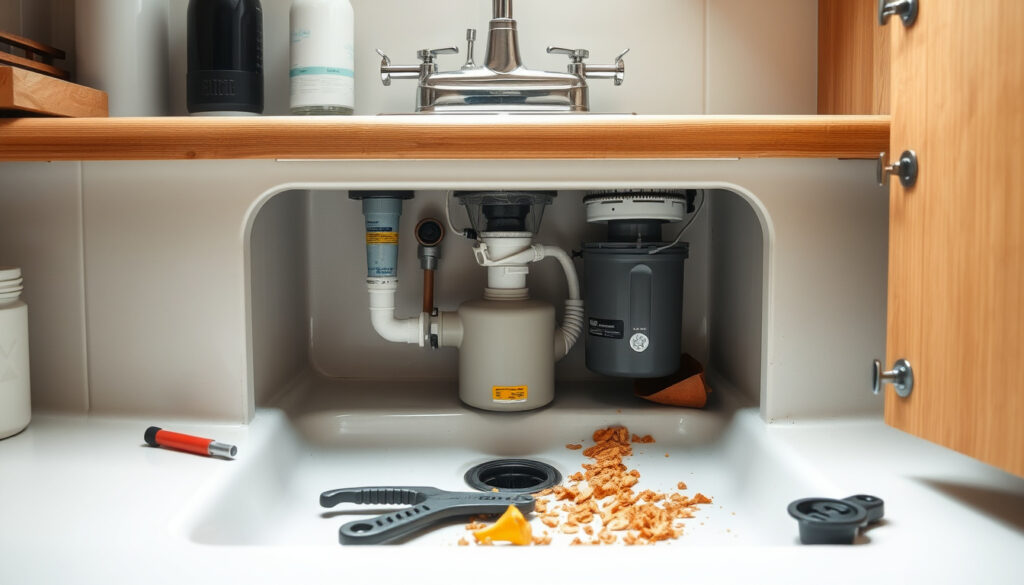
Garbage Disposal Not Working – Common Causes and Fixes
Garbage Disposal Not Working: Common Causes and How to Fix
When a garbage disposal stops working, the problem usually traces back to a handful of common causes: power issues, jammed components, or drain clogs. Most malfunctions can be diagnosed and resolved without calling a professional, though understanding what to look for matters.
Garbage disposals hum, grind, and process food waste for years when maintained properly. When they fail, the symptoms often point directly to the underlying issue. A unit that hums but does not spin typically indicates a jam, while one that remains completely silent may have an electrical problem. Identifying the specific symptom narrows down the fix quickly.
This guide walks through the most common reasons a garbage disposal stops working, organized by symptom and severity. Safety precautions, step-by-step troubleshooting, and guidance on when repair or replacement makes more sense are covered below.
Garbage Disposal Humming But Not Working
A disposal that hums when activated but fails to grind usually means the motor is running while something prevents the impellers or flywheel from turning. This happens when foreign objects lodge against the blades or when accumulated food debris binds the mechanism.
According to appliance repair specialists, jammed impellers account for a significant portion of disposal failures. The humming sound indicates the motor has power and is attempting to operate, but physical obstruction prevents rotation.
Before attempting any repair, verify the power is off. Unplug the unit or switch off the circuit breaker supplying the disposal. This prevents injury from accidental blade movement during inspection.
Overview: Common Symptoms and Initial Checks
Check outlet, wiring, and circuit breaker first.
Indicates jammed impellers or flywheel obstruction.
May signal burned-out motor or faulty motor capacitor.
Points to clog in drain line or P-trap.
Key Insights for Troubleshooting
- The red reset button on the bottom or side of the unit trips when the motor overheats or draws too much current. Pressing it restores function after the motor cools.
- A 1/4-inch Allen wrench inserted into the hex socket beneath the disposal manually rotates the flywheel to free jams.
- Never reach into the disposal with hands or fingers, even when powered off—always use tongs or pliers for debris removal.
- Foreign objects such as utensils, bones, or fruit pits commonly cause jams that produce the humming symptom.
- If the unit continues humming after clearing the jam, the motor bearings or blades may be damaged and require professional service.
- Running cold water while operating the disposal helps flush waste and reduces the likelihood of future jams.
- Chemical drain cleaners should be avoided, as they can corrode internal components and void warranties.
Snapshot: Facts and Figures
| Category | Detail |
|---|---|
| Most common symptom | Humming with no grinding |
| Primary cause | Jammed flywheel or impeller |
| Reset button location | Bottom or side of unit |
| Wrench size for manual turning | 1/4-inch Allen/hex |
| Cooling time after overheating | 5–10 minutes |
| DIY fix rate estimate | Approximately 80% |
| Professional repair cost | $100–$300 |
| Replacement cost (parts + labor) | $150–$500 |
Garbage Disposal Not Working But Has Power
When a disposal receives electrical current but fails to operate, the issue typically falls into one of three categories: the reset button has tripped, the power connection is loose, or the motor itself has failed internally.
Checking the power connection under the sink represents the first and simplest step. Plumbing and appliance experts note that items stored under the sink often shift, accidentally unplugging the power cord from the outlet. A secure connection at the receptacle rules out this common oversight.
Checking Power Sources
Locate the power cord beneath the sink and confirm it sits firmly in the outlet. Inspect the circuit breaker panel for a tripped breaker labeled for the kitchen disposal. Flip the breaker fully off, then back on to reset it. If the breaker trips again immediately, the circuit may be overloaded or the disposal drawing excessive current.
The reset button, typically red and located on the underside of the unit, pops out when the motor overheats or experiences a surge. Pressing it back in with firm pressure often restores function after allowing the motor to cool for several minutes.
The Reset Process Explained
If the reset button has popped out, let the unit rest for five to ten minutes. Reinsert the button, plug the unit back in or restore circuit power, run cold water, and turn the disposal on. Should the button pop out again after operation, the motor may be failing or drawing more current than normal. Persistent tripping indicates an electrical issue requiring professional diagnosis.
Always disconnect power before opening the disposal chamber or reaching inside. For hardwired units, switch off the circuit breaker. For corded units, unplug from the outlet beneath the sink. Failure to do so risks serious injury from spinning blades.
When power checks and resets fail to restore function, the motor winding or capacitor may have burned out. Repair professionals can test motor resistance and continuity, but replacement often proves more cost-effective for older units.
Why is My Garbage Disposal Not Working and Sink Not Draining
A disposal that refuses to operate alongside a sink that will not drain usually points to a clog somewhere in the drain line rather than a fault within the disposal itself. Food waste, grease accumulation, or foreign debris can obstruct the drain path between the disposal chamber and the main sewer line.
When water backs up into both sink basins, the clog typically sits in the shared drain line downstream of both connections. If only one basin backs up while the other drains normally, the blockage may be localized to that specific side or in the P-trap assembly beneath the sink.
Clearing Drain Clogs
Running cold water for thirty to sixty seconds while activating the disposal helps flush minor accumulations. For stubborn clogs, plunging the drain often dislodges the blockage. Fill the sink with several inches of water, place a plunger over the drain opening, and pump vigorously several times. The pressure change frequently breaks up the obstruction.
After plunging, manually turning the disposal blades with an Allen wrench helps break apart debris that remains lodged. The P-trap beneath the sink should be checked and cleaned if water continues to back up. Remove the trap carefully, empty the contents, and inspect for obstructions before reassembling.
Avoid pouring grease, oil, or fatty liquids into the disposal. These substances congeal as they cool, coating the interior components and drain lines. Running cold water during and after use helps solidify grease so it grinds rather than sticking.
Garbage Disposal Not Working After Reset
A disposal that fails to operate even after pressing the reset button indicates a more serious underlying problem. Several scenarios can cause this: the button itself may be defective, the overload protector may have failed, or the motor may have burned out completely.
Reset Button Not Holding
When the reset button pops back out immediately or refuses to stay pressed, the overload protector has detected a fault it cannot self-correct. Repeatedly resetting without addressing the root cause risks damaging the motor further. At this point, visual inspection for burns, melting, or unusual odors from the motor housing becomes necessary.
Manual Reset Alternative
Some disposal models feature a manual reset mechanism accessible without a dedicated button. Cycling power at the breaker while allowing capacitors to discharge completely can sometimes reset the internal overload circuit. However, if this method fails, the unit requires professional evaluation or replacement.
If the disposal remains completely silent when turned on and the reset does nothing, testing the outlet with another device helps determine whether the problem lies with the power supply or the disposal itself. A functioning outlet that fails to power the disposal points toward motor failure.
When to Consider Garbage Disposal Replacement
Repair costs for professional motor replacement, seal replacement, or electrical component fixes typically range from one hundred to three hundred dollars, depending on the specific issue and local labor rates. For older units, these costs often approach or exceed the price of a new disposal.
Appliance retailers and repair services recommend replacement when the unit exceeds ten years of age, shows signs of leaking from the top or bottom, requires frequent resets, or produces a burnt odor indicating motor failure. New disposal units start around one hundred dollars, with professional installation adding one hundred fifty dollars or more to the total.
Repair vs. Replace Decision Guide
| Scenario | Recommended Action |
|---|---|
| Unit under 5 years, simple jam | Clear jam, reset, continue use |
| Unit 5–10 years, occasional issues | Repair if under $150, otherwise replace |
| Unit over 10 years, multiple failures | Replace |
| Burning smell from motor | Replace immediately |
| Water leaking from base | Replace |
| Constant resets needed | Replace |
| Foreign object damage to blades | Assess; repair or replace |
Troubleshooting Sequence: Step by Step
Following a systematic order for diagnosis saves time and prevents unnecessary work. The sequence below reflects the order most service professionals recommend:
- Turn off power at the outlet or circuit breaker before any inspection or manual intervention.
- Check the power connection to ensure the cord remains plugged in securely beneath the sink.
- Inspect the circuit breaker and reset if necessary at the electrical panel.
- Locate and test the reset button on the bottom or side of the unit, pressing firmly if extended.
- Allow the motor to cool for five to ten minutes if overheated before attempting another activation.
- Insert a hex wrench into the bottom socket and rotate back and forth to free any jammed flywheel.
- Remove visible debris with tongs or needle-nose pliers, never with bare hands.
- Press reset, restore power, run cold water, and test operation.
- Check the P-trap and drain line for clogs if the disposal runs but the sink does not drain.
- Call a professional if the motor hums continuously, produces burning odors, or fails to operate after completing all previous steps.
If the disposal operates but makes grinding sounds beyond normal, leaks water, or trips the breaker repeatedly, professional service or replacement is warranted. Attempting major motor or electrical repairs without proper training poses safety risks.
What We Know vs. What Remains Unclear
| Established Information | Information That Remains Unclear |
|---|---|
| Power disconnection required before troubleshooting | Exact failure point in motors without visible damage |
| Reset button location and function | Specific lifespan projections by brand |
| Hex wrench method clears most jams | Long-term impact of frequent resets on motor life |
| P-trap and drain clogs cause backing up | Precise failure rates by disposal age |
| Chemical cleaners damage internals | Optimal maintenance schedule for different usage levels |
| Replacement recommended after 10+ years | Whether specific food types cause predictable failure patterns |
Understanding Common Failure Causes
Garbage disposals experience the most failures from four primary sources: electrical issues preventing power delivery, mechanical jams from foreign objects or food buildup, thermal overload from extended use or overloading, and drain obstructions restricting water flow.
Food waste composition plays a significant role in longevity. Fibrous materials like celery, onion skins, and corn husks wrap around the impeller assembly and resist grinding. Grease and oils coat the grinding chamber and eventually solidify, reducing efficiency. Bones and fruit pits lodge against the blades and prevent rotation.
Regular maintenance using cold water flushes, periodic ice cube grinding to sharpen blades, and citrus peels or baking soda for deodorizing extends functional lifespan. Avoiding problematic foods and never overloading the chamber prevents premature wear.
What Experts and Users Say
Always turn off power before troubleshooting: unplug the unit if corded, or switch off the circuit breaker if hardwired, to prevent injury from spinning blades.
— Lowes, How to Repair a Garbage Disposal
Garbage disposals commonly fail due to power issues, jams causing humming, clogs in the drain, or overloads requiring a reset; most problems can be fixed DIY by checking power, resetting, unjamming with a wrench, or plunging.
— Reliable Plumbing LLC, Common Garbage Disposal Problems
Avoid chemical cleaners, as they damage the unit.
— Kingston Brass, Garbage Disposal Tips
Next Steps if the Problem Persists
Begin with the reset button and power connection check, as these address the majority of malfunctions. If the unit hums without spinning, use the Allen wrench method to free the jam before attempting operation again. For drain issues, plunging and P-trap inspection resolve most blockages.
When the disposal exhibits burning smells, constant tripping, or complete electrical failure despite troubleshooting, consulting a licensed appliance repair technician or plumber is the safest course. For a step-by-step DIY guide covering similar home appliance repair techniques, explore related maintenance resources on tire alignment procedures and other automotive home maintenance topics.
Are InSinkErator disposals harder to repair than other brands?
InSinkErator follows the same troubleshooting principles as other brands. Their models use the same reset button, wrench-based jam clearing method, and cold water operation. Repair procedures and common issues align with industry standards.
What do users on Reddit report about disposal motor failures?
Community discussions frequently cite burning smells and humming without operation as indicators of motor failure. Users recommend replacement over repair for units over eight years old due to parts availability and cost.
How much does a plumber charge to fix a garbage disposal?
Professional repair services typically charge between one hundred and three hundred dollars for motor, seal, or electrical component work. Full replacement including labor runs from one hundred fifty to five hundred dollars depending on the unit chosen.
Can I reset a garbage disposal without a reset button?
For units without a visible red reset button, cycling the circuit breaker off and on may discharge capacitors and reset the internal overload. If this fails, the unit likely has a failed overload protector requiring professional service.
Why does my sink back up when the disposal runs?
Water backing into the sink while the disposal runs indicates a clog downstream in the drain line, P-trap, or shared pipe. Plunge the drain, clean the P-trap, or use a drain snake to clear the obstruction.
How often should I replace my garbage disposal?
Most disposals function reliably for eight to twelve years with proper use and maintenance. Units requiring frequent repairs, leaking water, or exhibiting burning odors should be replaced regardless of age.
What should I avoid putting in a garbage disposal?
Fibrous vegetables like celery and corn husks, grease and cooking oil, bones, fruit pits, and non-food items damage blades and cause clogs. Run cold water during use and avoid overloading the chamber.
More related posts
 Deadpool & Wolverine Release Date: July 26, 2024 & Disney+
 What Happened to James Carville and Mary Matalin? News
 cvs.com/otchs/myorder: Login, Check Balance & Order Guide
 Pilates Class Near Me: Costs, Benefits & Local Studios
 Pokémon Games in Order: Release, Play & Generation Guide
 Best Clash Royale Deck Builder Tools Compared for 2025
 How to Write in Cursive – Step-by-Step Guide for Beginners
 Social Security Phone Banking Changes: New Rules