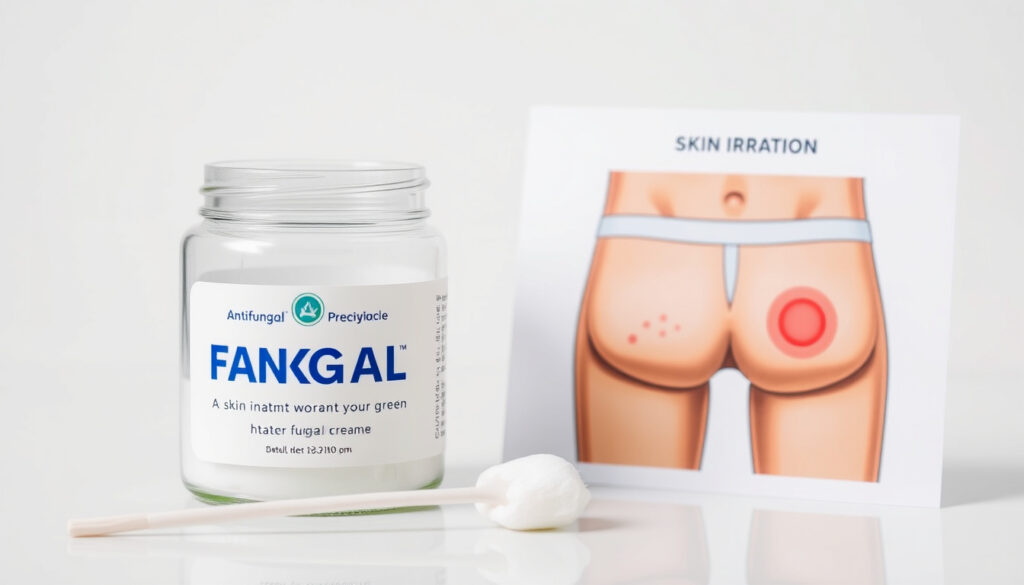
Jock Itch: Causes, Symptoms, and Effective Treatment Guide
Anyone who has dealt with a persistent, itchy rash in the groin area knows it’s not just uncomfortable—it’s hard to ignore. That red, scaly patch on the inner thighs is likely jock itch, a common fungal infection that thrives in warm, moist skin folds.
Cause: Fungal overgrowth (dermatophytes) · Common symptom: Itchy, red, ring-shaped rash on groin and inner thighs · Treatment: Over-the-counter antifungal creams (clotrimazole, terbinafine) · Risk factor: Excessive sweating, tight clothing, athletic activity · Contagious? Yes, through skin-to-skin contact or contaminated surfaces
Quick snapshot
- Fungal overgrowth (dermatophytes) (CDC – U.S. public health authority)
- Warm, moist environment in groin (CDC – U.S. public health authority)
- Tight clothing, friction, sweating (UCLA Health – academic medical center)
- Itchy, red, ring-shaped rash (Cleveland Clinic – non-profit medical center)
- Burning or stinging sensation (Cleveland Clinic – non-profit medical center)
- Flaking, peeling, or cracking skin (Cleveland Clinic – non-profit medical center)
- OTC antifungal creams (clotrimazole, terbinafine) (Cleveland Clinic – non-profit medical center)
- Keep area clean and dry (Cleveland Clinic – non-profit medical center)
- Oral antifungals for severe cases (Cleveland Clinic – non-profit medical center)
- Shower after exercise and dry thoroughly (UCLA Health – academic medical center)
- Wear loose, breathable cotton underwear (UCLA Health – academic medical center)
- Avoid sharing towels or clothing (Cleveland Clinic – non-profit medical center)
Here are key facts about jock itch from medical sources.
| Medical name | Tinea cruris | CDC – U.S. public health authority |
|---|---|---|
| Commonly affected group | Men, especially athletes | Doctor O’Donovan – clinical physician (YouTube) |
| Contagious period | Until rash completely clears | Cleveland Clinic – non-profit medical center |
| Recurrence rate | High without preventive measures | UCLA Health – academic medical center |
What is the main cause of jock itch?
What fungus causes jock itch?
- Jock itch is caused by dermatophyte fungi, most commonly Trichophyton rubrum (CDC – U.S. public health authority).
- These fungi naturally live on the skin but overgrow under favorable conditions (CDC – U.S. public health authority).
- The medical term for jock itch is tinea cruris, a type of ringworm (CDC – U.S. public health authority).
Why does jock itch occur in the groin area?
- The groin provides a warm, moist environment that dermatophytes love (CDC – U.S. public health authority).
- Friction from clothing and sweat traps moisture, allowing the fungus to multiply (UCLA Health – academic medical center).
- The inner thighs and skin folds are particularly vulnerable because they stay damp longer (Cleveland Clinic – non-profit medical center).
What risk factors increase the likelihood of developing jock itch?
- Excessive sweating and wearing tight clothing are major triggers (UCLA Health – academic medical center).
- Athletes and people who are overweight face higher risk due to increased moisture and skin friction (Doctor O’Donovan – clinical physician (YouTube)).
- Sharing towels, clothing, or sports equipment can spread the infection (Cleveland Clinic – non-profit medical center).
The implication: consistent moisture control is the foundation of prevention.
What kills jock itch quickly?
Treatment follows a clear sequence. Here is the day-by-day approach backed by clinical guidelines.
- Start an over-the-counter antifungal cream (clotrimazole, terbinafine, or miconazole) as soon as the rash appears.
- Apply the cream to the rash and a 1-inch border beyond it, twice daily for at least 1–2 weeks after the rash clears.
- Keep the groin area clean and dry: wash gently with mild soap and water, then pat dry.
- Change into loose, cotton underwear and avoid synthetic fabrics that trap heat.
- Use an antifungal powder to absorb moisture during the day.
Which over-the-counter antifungal creams are most effective?
- Clotrimazole, terbinafine, and miconazole creams are first-line treatments (CDC – U.S. public health authority).
- Apply the cream to the rash and a 1-inch border beyond it, twice daily (Cleveland Clinic – non-profit medical center).
- Continue use for at least 1–2 weeks after the rash disappears to prevent recurrence (NHS – U.K. health authority).
When should I see a doctor for prescription treatment?
- If the rash does not improve after 2 weeks of OTC treatment, consult a healthcare provider (Cleveland Clinic – non-profit medical center).
- Prescription oral antifungals like fluconazole or itraconazole may be used for severe or persistent cases (Cleveland Clinic – non-profit medical center).
- People with diabetes or weakened immune systems should seek medical advice early (CDC – U.S. public health authority).
How can I speed up recovery with home care?
- Wash the area gently with mild soap and water, then pat dry (Cleveland Clinic – non-profit medical center).
- Change into loose, cotton underwear and avoid synthetic fabrics that trap heat (UCLA Health – academic medical center).
- Use an antifungal powder to absorb moisture during the day (Cleveland Clinic – non-profit medical center).
For most people with mild jock itch, a consistent 2-week course of OTC terbinafine or clotrimazole, combined with drying the area thoroughly after bathing, resolves the rash within 7–10 days. The catch: stopping treatment too early invites a return of the infection.
The catch: stopping medication too early is the most common reason for recurrence.
Is jock itch from poor hygiene?
Why isn’t poor hygiene the direct cause?
- The fungus that causes jock itch is already present on healthy skin (CDC – U.S. public health authority).
- Poor hygiene alone cannot cause the infection—it is the warm, moist environment that allows fungal overgrowth (Cleveland Clinic – non-profit medical center).
- Even people who shower daily and launder clothes frequently can develop jock itch if sweat and friction are present (UCLA Health – academic medical center).
What role does moisture play in jock itch?
- Dermatophyte fungi thrive in moisture; a damp groin area after exercise or in hot weather is ideal for growth (CDC – U.S. public health authority).
- Regular bathing and careful drying reduce the moisture that fuels the fungus (Cleveland Clinic – non-profit medical center).
- But hygiene alone is not a guarantee—the fungus can still overgrow if conditions are favorable (UCLA Health – academic medical center).
Blaming jock itch on poor hygiene can lead to shame and delayed treatment. The infection is a common skin condition, not a cleanliness verdict. Anyone who sweats—athlete or not—is susceptible.
The pattern: moisture management, not blame, is the effective approach.
Is jock itch a form of STD?
What is the difference between jock itch and sexually transmitted infections?
- Jock itch is a fungal infection, not a sexually transmitted infection (Cleveland Clinic – non-profit medical center).
- It is not transmitted through sexual activity; it spreads through skin-to-skin contact or contaminated surfaces like towels and gym benches (Cleveland Clinic – non-profit medical center).
- Sexually transmitted infections such as herpes or syphilis produce different symptoms (painful sores, systemic symptoms) and require different tests (CDC – U.S. public health authority).
Can jock itch be mistaken for an STD like herpes or syphilis?
- Jock itch typically presents as a ring-shaped, scaly, intensely itchy rash on the inner thighs—not painful blisters or ulcers (Cleveland Clinic – non-profit medical center).
- Herpes causes painful vesicles; syphilis rash is not itchy and may be accompanied by flu-like symptoms (CDC – U.S. public health authority).
- A healthcare provider can differentiate with a simple skin scraping or culture (Cleveland Clinic – non-profit medical center).
Confusing jock itch with an STD can cause unnecessary anxiety and lead people to avoid seeking care. The treatment and prognosis for a fungal infection are entirely different from those for a sexually transmitted infection.
What this means: accurate diagnosis prevents both emotional distress and ineffective treatment.
What can get mistaken for jock itch?
What skin conditions look like jock itch?
- Intertrigo, eczema, psoriasis, candidal infection, erythrasma, and contact dermatitis can all mimic jock itch (Cleveland Clinic – non-profit medical center).
- A ring-shaped, red, scaly border is the classic sign of fungal jock itch, while eczema tends to have less distinct edges (CDC – U.S. public health authority).
- On darker skin, the rash may look gray or brown instead of red, which can further confuse the diagnosis (CDC – U.S. public health authority).
How can I tell jock itch from eczema or psoriasis?
- Jock itch typically affects the skin folds of the inner thighs and spares the scrotum; eczema can occur anywhere and often involves the scrotum (Cleveland Clinic – non-profit medical center).
- Psoriasis plaques are thicker, silvery, and less itchy than the scaly ring of jock itch (NHS – U.K. health authority).
- A skin scraping examined under a microscope can confirm the presence of fungal elements (Cleveland Clinic – non-profit medical center).
The implication: if the rash doesn’t respond to an antifungal, get it tested rather than guessing.
“Jock itch is a fungal skin infection that causes an itchy rash in warm, moist areas of the body.”
“Jock itch is a contagious fungal infection that causes an itchy, stinging, burning rash on the groin area.”
Cleveland Clinic – non-profit medical center
“Jock itch is a common fungal infection occurring in areas like the groin or inner thighs, appearing as an itchy, scaly rash.”
For athletes, gym-goers, and anyone who sweats heavily, the message is clear: jock itch is treatable and preventable. The choice is between a few minutes of post-workout hygiene and antifungal cream—or weeks of itching and frustration. For people with persistent or recurring infections, a visit to a primary care provider or dermatologist is the smartest step.
goodrx.com, youtube.com, my.clevelandclinic.org, wmic.wales.nhs.uk, ubiehealth.com
Like jock itch, athlete’s foot is another common fungal infection caused by dermatophytes, and you can read our athletes foot guide for a detailed comparison of symptoms and treatments.
Frequently asked questions
Can jock itch spread to the penis or scrotum?
Yes, the rash can extend to the scrotum and penis, though the scrotum is often spared. The fungus spreads through skin contact and moisture (Cleveland Clinic).
Can women get jock itch?
Jock itch is less common in women because the groin anatomy is less prone to moisture trapping, but women can develop tinea cruris, especially athletes (CDC).
How long does jock itch last without treatment?
It can persist for weeks to months without treatment and often worsens. The rash may spread and become more uncomfortable (Cleveland Clinic).
Is jock itch contagious through clothing or towels?
Yes, dermatophyte fungi can survive on fabric. Sharing towels, underwear, or sports equipment transmits the infection (Cleveland Clinic).
Can I use hydrocortisone cream for jock itch?
No, hydrocortisone (a steroid) can suppress inflammation but does not kill the fungus and may allow the infection to spread. Use an antifungal cream instead (CDC).
What is the best over-the-counter cream for jock itch?
Terbinafine 1% cream or clotrimazole 1% cream are first choices. Studies show terbinafine may cure slightly faster, but both are effective (NHS).
Does jock itch go away on its own?
Rarely. Most cases require antifungal treatment to clear. Without treatment, the rash can persist and cause secondary bacterial infection (Cleveland Clinic).
Can jock itch cause blisters or oozing?
Some people develop tiny bumps or blisters along the edge of the rash, but oozing is more common with bacterial infection or eczema. If blisters appear, see a doctor (Cleveland Clinic).
More related posts
 What Day Is Easter – 2025 Date April 20 and Calculation
 Nivea vs Vaseline for Dry Skin: Which Is Better for Gen Z?
 Trust in God Lyrics: Elevation Worship feat. Chris Brown
 Ad Astra Per Aspera: Meaning, Origin & Kansas Motto
 What Is a Coefficient? Definition & Examples in Math, Science
 2025 NBA Mock Draft: Top Picks & Full Projections
 Peach Slices Smoothing Solution – Ingrown Hairs Treatment Guide