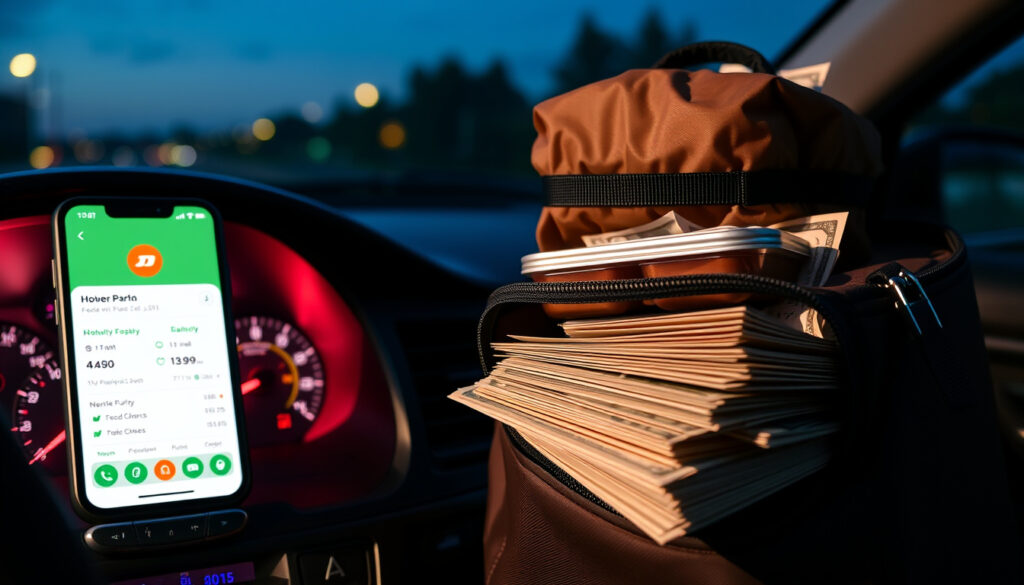
How Much Do DoorDashers Make? Hourly, Weekly Earnings
DoorDash driver ratings glow on the app, but those stars don’t tell you what lands in your bank account. Real-world tests and salary databases show gross hourly estimates of $17–$30 can drop to $10–$18 once you account for fuel, vehicle wear, and unpaid waiting time.
Hourly Range: $15-30 · Glassdoor Estimate: $17-24 per hour · Monthly Potential: $2000-3500 · Pay Components: Base + tips + promotions
Quick snapshot
- Pay = base + tips + promotions (NerdWallet)
- Tips fully retained by Dasher (NerdWallet)
- Exact hourly rate by location
- How 2026 rates compare to prior years
- Driver community reports show sustained demand (NerdWallet personal finance testing)
- Platform added hourly rate option in select cities (NerdWallet personal finance testing)
- $1000/week possible with 30-40 hours at strong markets
- Expenses can cut gross estimates by 30-50%
| Pay component | Details |
|---|---|
| Base Pay | Per offer, undisclosed range |
| Tips | 100% to Dasher |
| Promotions | Peak pay, challenges |
| 2026 Outlook | Data from drivers |
How much do door dashers make an hour?
Hourly earnings are where the numbers get fuzzy. Glassdoor puts the estimated DoorDash driver pay between $17 and $24 per hour, with some delivery driver listings reaching $20 to $30 per hour. Those figures come from self-reported salary data, so they reflect what drivers felt they earned—not always what landed in their bank accounts after expenses.
Factors affecting hourly pay
A few variables shift the needle hard:
- Market density: Dense urban zones tend to offer shorter trips and more orders per hour.
- Time of day: Peak pay bonuses during lunch and dinner rushes can meaningfully lift hourly totals.
- Acceptance strategy: Drivers who cherry-pick high-value offers often report higher averages, though DoorDash’s algorithm can deprioritize selective behavior.
- Vehicle efficiency: A driver burning $0.20 per mile in fuel nets far less per hour than one getting 30 mpg.
Driver-reported averages
Community reports from Reddit and Facebook groups suggest monthly averages in the $25-$30 per hour range for full-time drivers in active markets—though that’s a gross figure before vehicle costs. A NerdWallet journalist’s firsthand test illustrates the gap: over three shifts totaling 6.5 hours, the journalist grossed $86—roughly $13.23 per hour. After $19 in fuel costs across 90 miles driven, the net hourly rate fell to $10.31 per hour. That’s 39-61% below the Glassdoor estimate range.
Platform delivery workers report persistent challenges including low pay sometimes below minimum wage, unpredictable work volume, and opaque algorithmic management systems. Vehicle expenses are the biggest variable—fuel alone can slash gross hourly estimates by 20-30%.
How much can I make in 4 hours on DoorDash?
Four hours is a popular shift length for part-time Dashers. The honest answer depends heavily on market activity and how strategically you work that window.
Realistic 4-hour earnings
In a moderate market during a dinner rush, a driver might complete 3-5 deliveries in four hours, earning:
- Base pay: $2-5 per delivery
- Tips: $4-8 per delivery on average
- Peak bonuses during busy periods: additional $1-3 per delivery
A realistic gross range for a 4-hour shift: $40-$90, or $10-$22 per hour before expenses. After fuel costs (roughly $0.20/mile in most markets), net earnings typically land between $8-$18 per hour.
Variations by market and time
The difference between a good day and a disappointing one often comes down to timing and location. A driver in a suburban market working a weekday lunch might earn $35 in four hours. The same driver during a Friday dinner rush in a dense city could triple that. Research from ACM Digital Library peer-reviewed HCI study on platform labor confirms that location-based platform workers face significant variability in work volume and hours—a finding that tracks with what Dashers report in forums and social groups.
Can you make $1000 a week with DoorDash?
It’s possible, but hitting $1,000 weekly requires either a strong market, long hours, or both. Most full-time Dashers targeting this goal work 30-40 hours across five to six days.
Hours needed for $1000
At a net rate of $20-30 per hour (gross before vehicle costs), a Dasher would need roughly 35-50 hours to clear $1,000. Adjusting for expenses, effective hourly take-home might drop to $15-22, pushing the required hours toward 45-65 per week. NerdWallet personal finance publication notes that DoorDash also offers an hourly rate mode in select cities, with an example rate of $16.75 per hour—but that model only compensates for “active” delivery time, excluding the minutes spent waiting between orders.
Tips to hit the target
- Work peak dinner hours (5-9 PM) when order volume and tips are highest
- Multi-app strategically (DoorDash + Uber Eats + Grubhub) to fill dead periods—though this dilutes DoorDash-specific earnings
- Track your actual mileage using a mileage tracker app; IRS deductions for gig work can recover $0.67 per mile at current rates
- Optimize acceptance rate for markets where DoorDash rewards top performers with surge pay or challenge bonuses
The implication: hitting $1,000 requires either a high-volume market or accepting that you’ll spend significant unpaid time waiting between orders.
How much do door dashers make a week?
Weekly earnings paint a wider picture than hourly snapshots. Part-time drivers commonly report $300-600 per week; full-time drivers in active markets report $800-1,500.
$500 vs $1000 weekly
Reaching $500 per week typically requires 20-25 hours in a decent market—that’s feasible for many part-time Dashers. Hitting $1,000 demands either a high-volume market (think major metros on weekend nights) or 40+ hours of consistent driving. A driver working Friday through Sunday evenings might gross $400-600 in those three days alone.
Full-time vs part-time
Full-time Dashers (30+ hours weekly) report monthly totals between $2,000 and $3,500 before taxes and vehicle expenses. The range reflects market quality more than hours worked—someone driving 50 hours in a slow suburban market may earn less than someone driving 30 hours in a busy urban corridor. Peer-reviewed HCI research on platform labor notes that platform delivery work has created new paying work opportunities and livelihood strategies, but sustainability depends heavily on local demand and individual expense management.
Women earn less than men on delivery platforms due to customer rating effects on work access, per peer-reviewed research. This earnings gap is worth noting for any driver concerned about how acceptance rates and ratings translate to consistent income.
Is DoorDash worth it?
Worth it depends entirely on your goals, your market, and how you count the costs. For flexible side income, DoorDash offers low barriers to entry. For primary income, the math gets tighter once vehicle depreciation, insurance, and taxes enter the picture.
Pros and cons for Dashers
Upsides
- Set your own schedule—work 5 hours or 50
- 100% of tips go directly to you
- Instant cash-out via DasherDirect card
- Low barrier to entry (no interview, start same day)
- Weekly direct deposit option
Downsides
- Vehicle costs eat into gross earnings 20-40%
- Net hourly rate often well below Glassdoor estimates
- No guaranteed minimum per hour
- Algorithmic order assignment can be opaque
- Self-employment tax (roughly 15.3% on net earnings)
Comparison to other apps
DoorDash leads the US food delivery market by volume, but earnings structures vary enough that platform choice meaningfully impacts what you take home.
| Platform | Pay structure | Reported range | Key difference |
|---|---|---|---|
| DoorDash | Base + tips + promotions | $15-30/hr gross | Large order volume, lower average tip per mile |
| Uber Eats | Base + tips + surge | $15-28/hr gross | Rider ecosystem shared with rideshare |
| Instacart | Item-based + tips | $18-35/hr gross | Higher tips for in-store shopper time |
| Amazon Mechanical Turk | Task-based | $3.01/hr avg | Not comparable—microwork, not delivery |
What this means: DoorDash drivers earn 5.6-8× more per hour than Amazon Mechanical Turk workers, though that comparison measures very different gig economy work. For food delivery specifically, DoorDash and Uber Eats occupy similar earning ranges; Instacart often pays higher per order but requires more physical labor and longer shopping times.
NerdWallet personal finance publication, firsthand testing reported: “I made less than that [Glassdoor estimate range],” after earning just $10.31 per hour net after fuel costs.
ACM Digital Library peer-reviewed HCI research on platform labor notes: “workers on these platforms report a variety of persistent challenges, such as low pay (sometimes below minimum wage), unpredictable work volume and hours, opaque and error-prone algorithmic management systems.”
every.to, gridwise.io, glassdoor.com, notion.notion.site, glassdoor.com, remoteok.com
DoorDashers often share on Reddit that they clear hourly and weekly pay breakdowns from $17-30 per hour after expenses, with top earners hitting $1,000 weekly.
Frequently asked questions
How does DoorDash calculate base pay?
DoorDash calculates base pay per offer, but the exact formula is undisclosed. Base pay considers order distance, difficulty, and time estimate—but DoorDash does not publish the range publicly. Drivers receive the base pay amount before seeing the customer’s tip, so there’s no incentive to decline based on tip amount.
What affects DoorDasher tips?
Tips depend on order size, distance, and customer behavior. Orders from full-service restaurants tend to tip higher than fast food. Timing matters too—dinner rush orders often carry larger tips. Customer ratings can influence order flow over time, and research shows women on delivery platforms earn less due to rating-based access effects.
How much gas does DoorDash reimburse?
DoorDash does not reimburse gas directly. Drivers cover all vehicle costs out of pocket. The current IRS mileage deduction for gig work is $0.67 per mile, which can help offset fuel costs when calculating taxable income. Tracking miles with an app is strongly recommended for tax purposes.
Are there taxes on DoorDash earnings?
Yes. Dashers are independent contractors (1099), meaning they owe self-employment tax (roughly 15.3% covering Social Security and Medicare) plus income tax on net earnings. Estimated quarterly payments are required if you expect to owe $1,000 or more annually. The silver lining: legitimate business expenses (vehicle maintenance, phone bill, mileage) are deductible.
What is peak pay?
Peak pay is an additional bonus DoorDash adds during high-demand periods—often $1-5 extra per delivery. Peak periods typically align with meal rushes (lunch 11am-2pm, dinner 5pm-9pm) and bad weather days. Not all markets or time slots offer peak pay, and the amount varies by location.
How to track DoorDash earnings?
DoorDash provides an in-app earnings dashboard showing gross pay, tips, and bonuses. For tax and expense tracking, drivers should also log miles driven (use a mileage app), fuel receipts, and any maintenance costs. Spreadsheets or dedicated gig finance apps help separate DoorDash net earnings from gross to see true hourly take-home.
Does DoorDash pay weekly?
DoorDash offers weekly direct deposit—earnings from Monday through Sunday arrive the following Wednesday or Thursday, depending on your bank. For faster access, DoorDash’s DasherDirect prepaid Visa card allows instant cash-out after each delivery for a small fee. NerdWallet’s test driver received their first week’s earnings ($23.25) via direct deposit five days after their initial delivery.
More related posts
 Torn Meniscus Symptoms Test – Diagnosis, Tests and Recovery Guide
 Winter Solstice 2025: Date, Time & Celtic Traditions
 Steve Buscemi Movies and TV Shows: Complete Guide
 Alone in the Dark 2024: PS5 Review, Remake Facts
 Marc Jacobs Snapshot Bag: Is It Still Worth It in 2025?
 Machine Shop Near Me: Costs, Benefits, Turnaround & What to Expect
 iPhone 15 Pro Max Price: Current Deal & Trade-In Value
 Rolled Ice Cream Near Me: Ireland’s Best Hand-Rolled Spots